A realistic look at what actually pays, what takes time, and what to expect before you start
Most guides to earning money online promise more than they deliver. Search the phrase and you will find the same handful of platforms recycled across dozens of near-identical lists, usually with vague numbers and no real explanation of why one method pays better than another. The truth is less flashy but more useful: there are several genuinely workable ways to earn online without spending anything upfront, and the differences between them come down to time, skill, and how much effort you are willing to put in before the first payout arrives.
This isn't a list of secret hacks. It's a breakdown of what real income from these methods tends to look like, where the effort goes, and how to avoid the schemes that dress up unrealistic promises as opportunity.

Trading time for money: the fastest way to start
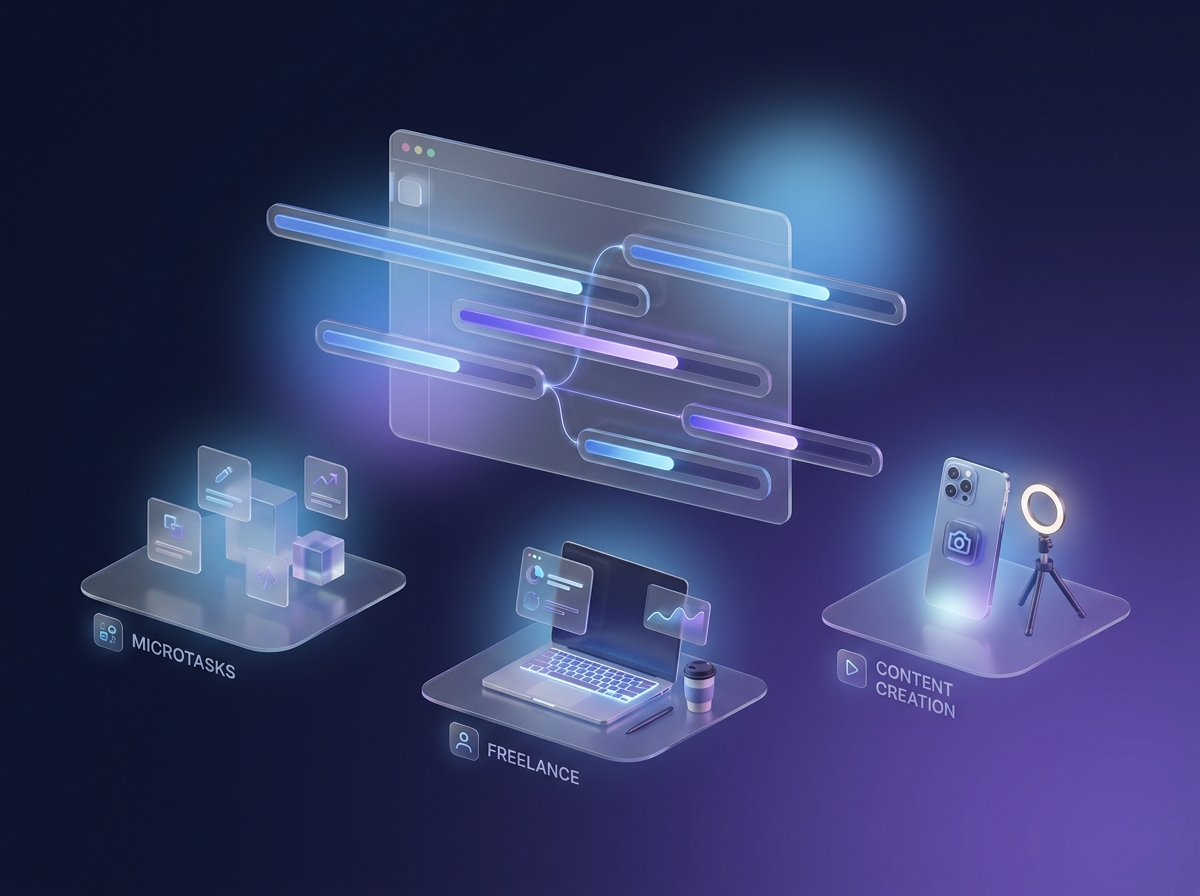
Microtasks, surveys, and small paid gigs are the lowest-effort entry point. Sign up, complete short tasks, get paid in small amounts. No portfolio, no pitch, no waiting period. The tradeoff is a low ceiling: consistent effort in this category usually adds up to a modest amount each month, not a meaningful income on its own.
This is a reasonable starting point if you want to test whether earning online fits into your routine before committing more time elsewhere. Just don't expect it to scale. Ten hours a week here will always look roughly the same in month six as it did in month one.
Selling a skill: freelancing and services
Writing, design, virtual assistance, tutoring, voice work — anything you can do remotely and charge for. This is where real income tends to show up, but it requires patience most guides skip over: your first few clients are usually the hardest to land, and early rates are often lower than what you're worth. Reputation, not luck, is what moves the needle here.
The upside is that this category has no real ceiling. Freelancers who stick with one skill and keep improving their portfolio over several months typically see their rates climb well past what any task-based platform could offer.
Building something once, selling it repeatedly
Digital products — templates, guides, presets, small courses work differently from the two categories above. Instead of trading hours for pay, you build something once and it keeps generating income as long as people want it. There's no cash outlay to get started, but there is a real investment of time upfront, and no guarantee the first thing you make will sell well.
This model rewards people who already have some expertise to package, and it's a poor fit for anyone hoping to see results in the first few weeks.
Content and audience-based income
Blogging, video, and social platforms follow a similar logic to digital products, but with a longer runway. Monetization on most platforms only kicks in once you've built a real audience, which for most creators takes several months of consistent output before it turns into anything close to steady income. It's a legitimate path, but it rewards people who enjoy the process itself, not just the payout at the end.
Background earning: income that doesn't compete for your time
A smaller but increasingly common category works differently from everything above. Instead of trading time, skill, or an audience for income, some applications reward users simply for running in the background while unused internet capacity sits idle. There's no task to complete and no content to produce the app runs quietly while you do something else entirely.
The tradeoff is scale. Because this model asks nothing of your time, it isn't designed to replace the categories above it's a background layer of income that sits on top of whatever else you're doing. What you earn depends on a mix of factors: location, demand for that type of usage, connection quality, uptime, and how many devices you run it on. Nobody running this kind of app should expect it to behave like a job.
Given how new this category still is, it's also one where trust matters more than usual. The strongest signals to look for are a clear verification process, encrypted connections, and activity that's monitored both manually and with AI — rather than a black box you're simply expected to trust.

Where ByteLixir fits into this picture
ByteLixir is one example of this background category. It's an app for Windows and Android: you register on the website, download it from your dashboard, and leave it running while it makes use of unused internet capacity on your device. The rest happens without any input from you.
The product is built around the same trust signals worth looking for in any app like it connections are encrypted, activity is AI-checked and monitored, and the earning framework is transparent about what actually affects your results, rather than leaving it vague. As with any background model, what you earn varies by location, demand, connection quality, uptime, and how many devices you have running. ByteLixir doesn't position itself as a replacement for the income streams above it's a reasonable addition to them, particularly for anyone already juggling a laptop and a phone that spend most of the day doing very little.
Choosing what actually fits your situation
The honest answer to "how do I make money online without investment" isn't a single method it's picking the right combination for your time and goals. If you need cash quickly, microtasks and surveys get you there fastest, even if the ceiling is low. If you're building toward something longer-term, freelancing or digital products reward the effort you put in. And if you simply want a background stream that doesn't ask anything of your schedule, that's where an app like ByteLixir makes sense as one part of the mix, not the whole plan.
Start with one method, give it a real trial period of a few weeks, and look honestly at what it returned for the time you put in. That's a better filter than any list of numbers — including this one.
If the background category is what interests you most, a sensible way to start is running it on a single device first, seeing how it performs over a few weeks, and deciding from there whether it's worth adding more.
Next Steps to Earn More
Explore how ByteLixir works, compare similar apps, and learn more about the platform’s safety and transparency.
-
Can you really make money online without investment in 2026?
Yes, but it is important to avoid “quick money” expectations. Real options include microtasks, freelancing, content creation, digital services, and background income apps. The difference is in the time required, the skills needed, and the size of the result.
-
What online earning methods are suitable for beginners with no experience?
Beginners can start with surveys, simple microtasks, data labeling, basic content work, or apps that run in the background. These methods have a low entry barrier, but earnings are usually limited. For higher income, it makes sense to gradually move toward freelancing or digital services.
-
What affects earnings in background apps like ByteLixir?
Earnings depend on region, current demand, connection stability, device activity time, and overall system load. That is why the amount is not fixed: some periods may bring more activity, while others may be slower. It is an additional background income source, not a replacement for a main job.